
The Murray County Most Wanted Program
A most wanted list is a publicity tool, nothing more. An agency picks a few open cases, posts them where the public will look, and asks for tips. It does not change the warrant. The court file behind the case still controls everything. Murray County runs no such program. The sheriff's page offers contact details and links for requesting public data, the county site carries no warrant section, and none of the five largest city pages posts a roster. A program could start without notice. So check the sheriff's site before assuming otherwise.
No Murray County Most Wanted Page Was Located
The pieces that make a real program are simply absent here. Murray County has no list address, no curated roster, no tip phone or form, no reward offer, no partner agency, and no update date. What the county does offer is a contact route. The Sheriff's Office answers its non-emergency line during weekday hours. It also accepts written requests for public data. That is where to start when no list exists. An empty search proves nothing either way. Someone left off every roster can still have an open warrant. Someone posted may already have been arrested since the page went up. Note: Treat any Murray County wanted list you find on a commercial site as unverified until an official agency confirms it.
How the Lists Work
Where a list does exist, three habits decide whether it helps anyone. The agency dates the page. It updates entries when arrests happen or warrants get recalled. It tells readers what to do with a sighting. A curated list is only a slice of the open warrants an agency holds. It reflects a publicity choice about a handful of cases, not a full count of everything outstanding. It also changes only when staff find time to edit it. That lag carries real risk. A face and a name can outlive an arrest, and a stale page can follow someone long after the Murray County case is resolved.
Federal Fugitive Information and Murray County Warrants
Federal warrants live in federal dockets. They never sit in a county case file. The District of Minnesota states that warrants and surveillance orders are unsealed only by court order. Once unsealed, a warrant can be viewed at a Clerk's Office public terminal or through the federal case system. The U.S. Marshals Service district page includes Murray County in its service area and lists a fugitive task force. It states that no profiled fugitive information is available for the district. A state case search cannot answer that. It cannot certify that no federal warrant exists. The federal case system is the route when paperwork names a United States court.
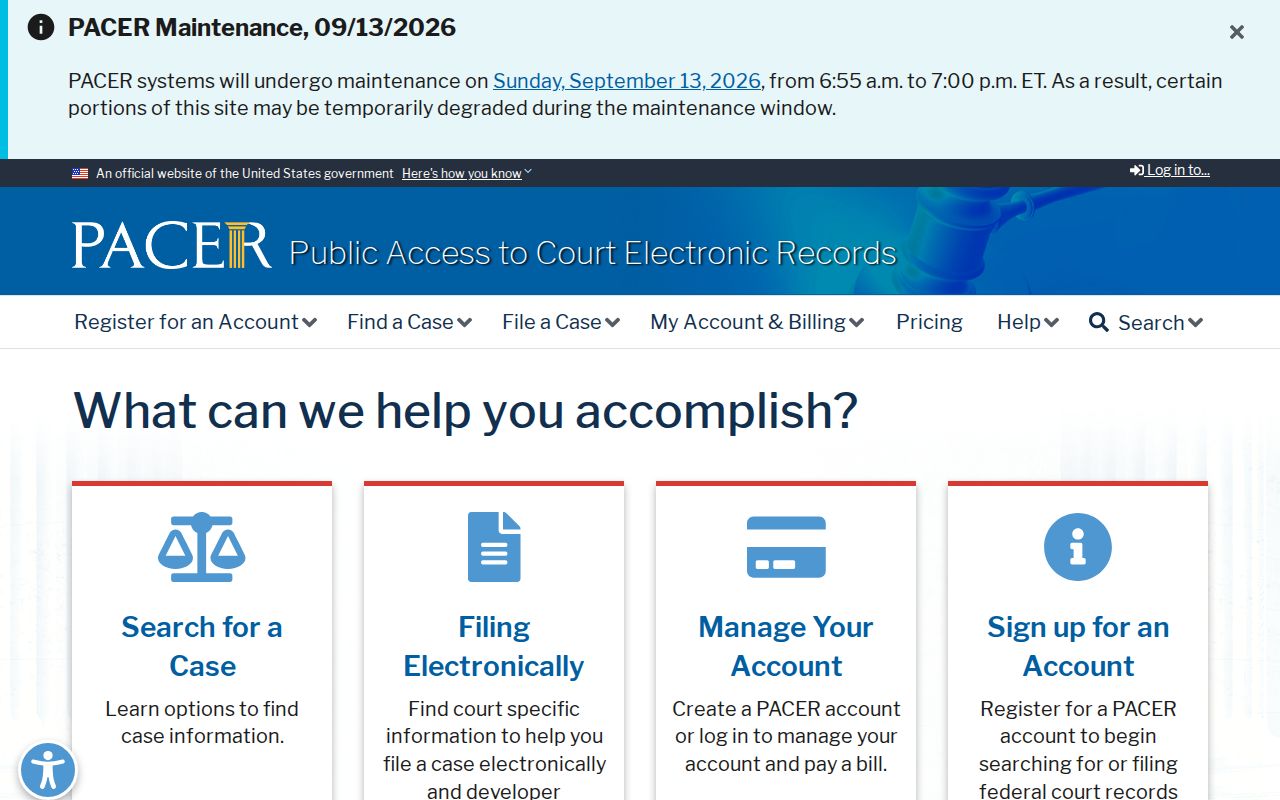
That system sits apart from anything Murray County keeps. Federal criminal forms include search, tracking, and seizure warrants, which are different documents from a state arrest warrant.
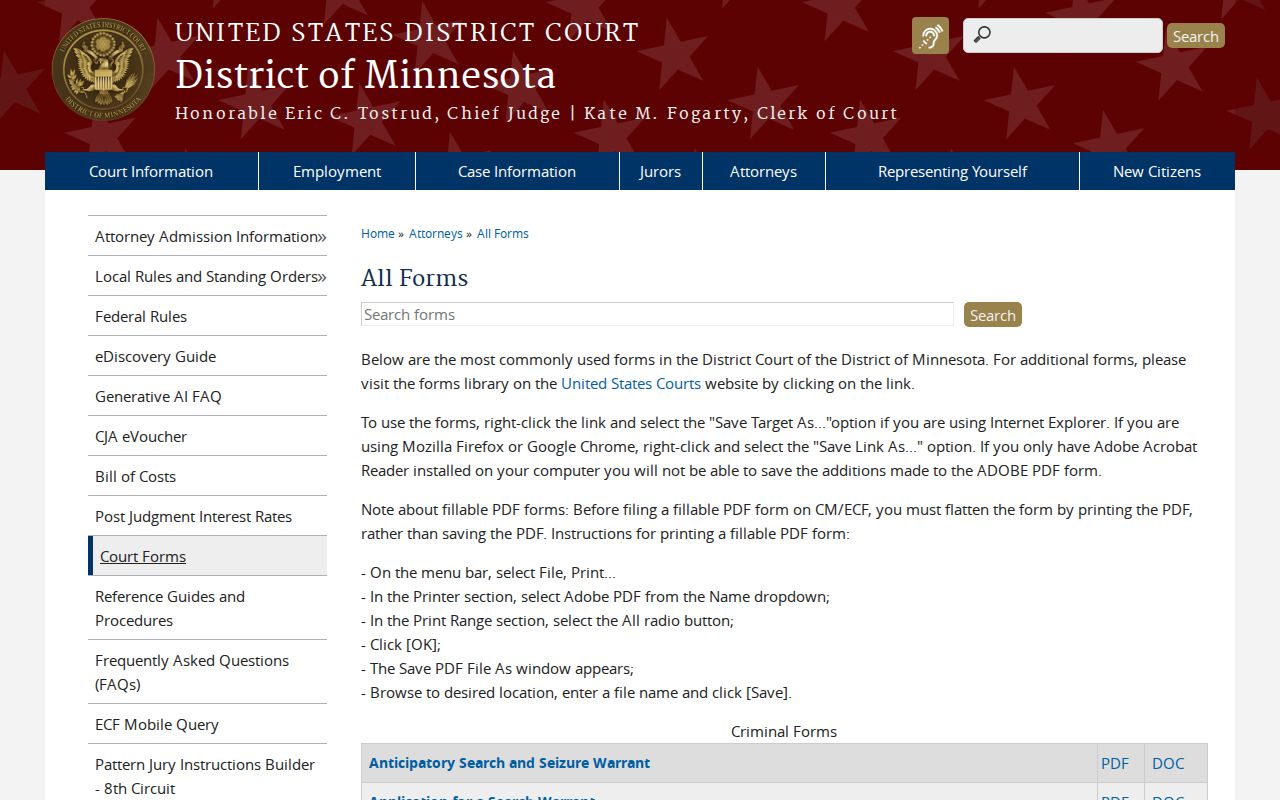
The forms directory shows how broad the federal warrant family is.
How to Report a Tip Safely
Murray County publishes no tip line for wanted listings. Call 911 if something is happening now; call the Sheriff's non-emergency line when it is not.
Key Point: Give the agency the information and let officers decide what to do. Do not approach anyone, do not post a location publicly, and do not try to confirm an identity yourself.
Write it down while it is fresh. The time, the place, and what you observed help a Murray County dispatcher more than a guess at a name.
Why the Sheriff May Withhold a Murray County Warrant Index
Minnesota treats a law-enforcement warrant index differently from the court file. Under Minn. Stat. § 13.82, subdivision 19, index data stay confidential until the defendant is in custody, is served, or appears in court. That rule explains the silence. Murray County can hold an active warrant and publish nothing. Silence is legal here. An online search can return nothing for a person who has a warrant, and the federal public access page describes the same limit for sealed documents.
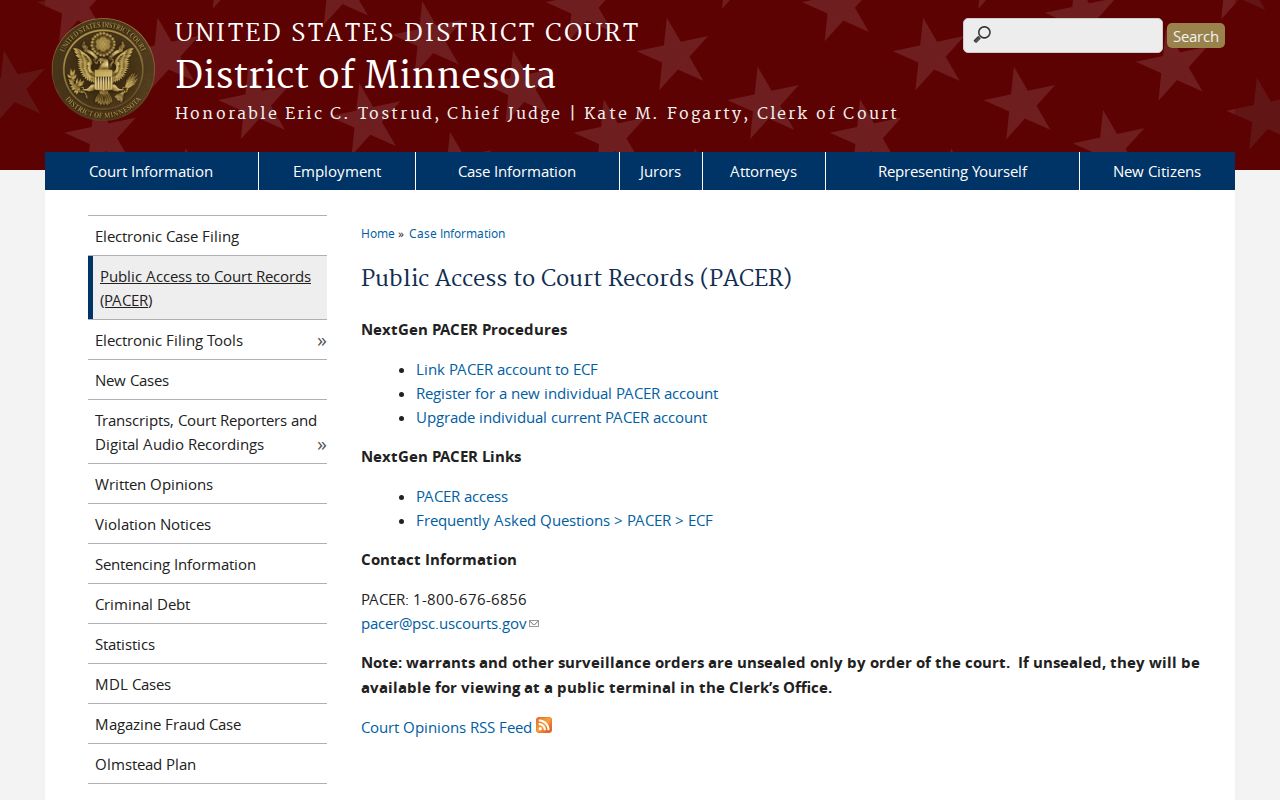
The same logic holds whether the order came from a Murray County court or a federal one.
Most Wanted vs an Active Warrant
The two terms describe different things, and readers mix them constantly.
| Point of Comparison | Most Wanted List | Active Warrant |
|---|---|---|
| Who controls it | The agency that runs the publicity program | The issuing court and the serving agency |
| How complete it is | A chosen few cases | Every open warrant in the county |
| How it updates | When staff revise the page | When a judge or an officer acts |
A missing name proves nothing. Someone left off every wanted list can still have an active warrant, and the Murray County active warrant records page explains where that status is confirmed.
Why This Site Does Not Republish Murray County Warrant Names
A public record is not always fair to copy. Names, photos, and addresses follow people long after a case resolves, and a copied roster cannot be corrected when the underlying status changes. Describing an official list instead, and linking to it, keeps the agency in control of its own data. That control matters. It protects the person arrested and released. It protects the witness too. It even protects the reader who might act on a stale page. So Murray County warrant names stay with the offices that can correct them.
If You Believe You Are on a List
A posted page cannot settle your own status. Only the district court can confirm what a list entry really means for a case. Call the Murray County Sheriff's Office too, and ask whether any enforcement record exists under your name. Before you reach out or show up anywhere, talk with an attorney. A lawyer can pull the current order, request a recall, and walk you through what a court appearance would involve.
Important: A stale list can be wrong. Never approach a person you believe is wanted, and never act on a photograph you cannot verify with an official agency.
Call 911 or the Murray County Sheriff About a Warrant
Two numbers, two situations. Murray County routes emergencies to 911. That means danger now, or a crime in progress. For anything about a record, a service status, or a custody route, the Sheriff's non-emergency line is 507-836-6168. The office answers weekdays from 8:00 a.m. to 4:30 p.m. and accepts written data requests along with phone calls. Keep records questions off the emergency line. A dispatcher also cannot confirm a warrant over the phone.